AI and Personalized Security Training for Transit Employees

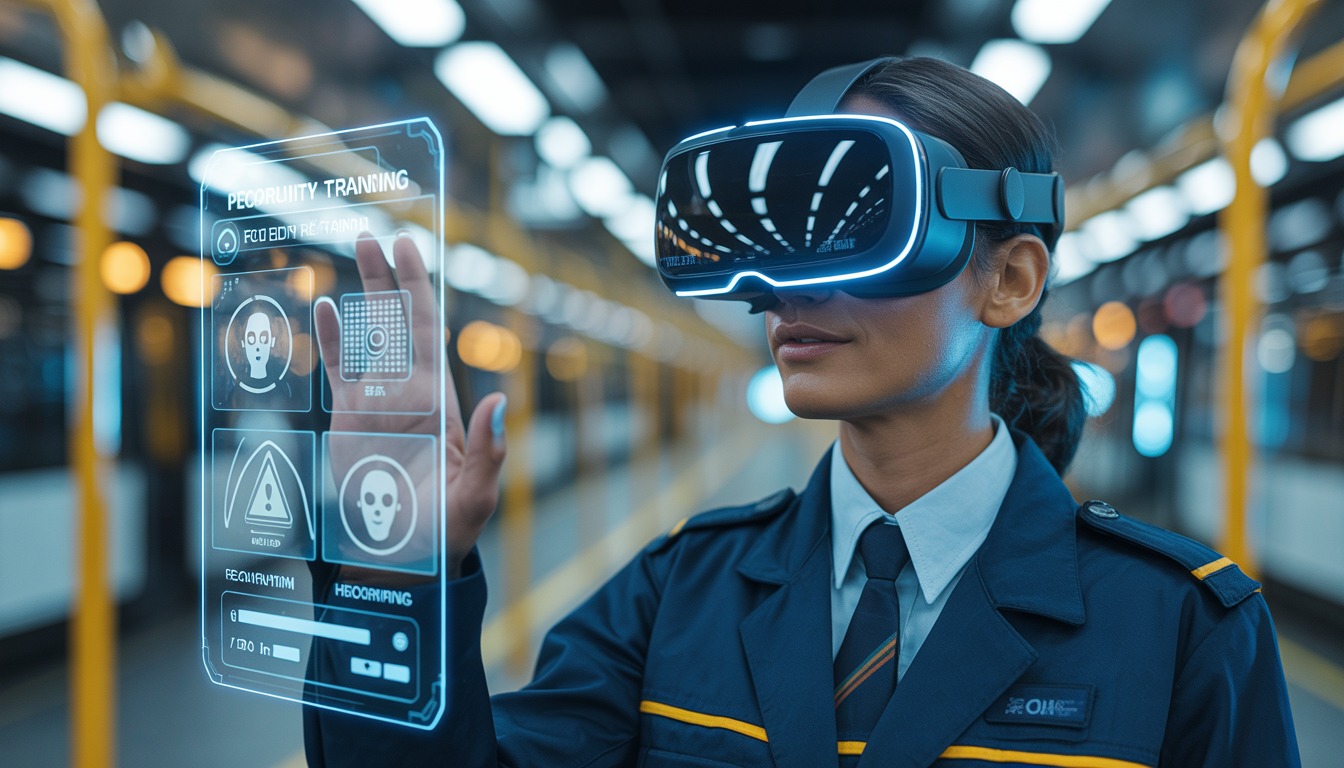
Table of Contents
AI and Personalized Security Training for Transit Employees
The landscape of public transportation is vast, complex, and continuously moving. From the bus driver dealing with city traffic to the train conductor on a fast route, the duties are large. At the heart of this ecosystem lies a critical mandate: keeping passengers and personnel safe.
Historically, security training for transit employees has been a monolithic exercise. Managers often took large groups of employees to conference rooms.
They viewed the same videos, completed the same quizzes, and received the same certifications, regardless of their daily risks or experience levels. While this approach checks the regulatory boxes, it often fails to address the nuanced reality of modern transit security.
Artificial Intelligence (AI) is changing this paradigm. Transit agencies can now move from fixed, one-size-fits-all curriculums to flexible, adaptive learning environments. This change allows them to provide training that responds to the systems they operate. This article explores how AI is transforming transit safety, ensuring compliance with federal standards while empowering the workforce with personalized, actionable intelligence.
The Evolving Landscape of Transit Security and the Role of AI
The threats facing transportation systems today are varied, ranging from cybersecurity breaches to physical assaults on frontline workers. The Federal Transit Administration (FTA) and the Transportation Security Administration (TSA) have updated their rules. They focus on a more active and data-driven approach to safety.
The traditional "train-and-pray" approach is no longer sufficient. This method trains employees once and expects them to remember everything forever. Cognitive science tells us that knowledge retention drops significantly over time without reinforcement.
AI platforms can assess an employee's performance. They can promptly identify knowledge gaps. Then, they offer small learning modules to fill those gaps.
A bus operator who struggles with de-escalation may not need a yearly refresher. Instead, they could receive a quick 5-minute scenario on their tablet before starting their shift. This continuous, personalized loop transforms security training from a compliance burden into a strategic asset.
Understanding the Foundations: TSI and FTA Training Standards in the Modern Era
Before diving into AI, it is crucial to understand the regulatory bedrock upon which transit safety is built. The Transportation Safety Institute (TSI) is part of the U.S. Department of Transportation. It has been a leader in developing key skills. TSI’s curriculum supports the FTA’s mission to provide state-of-the-art instruction.
Key frameworks include:
- Public Transportation Agency Safety Plans (PTASP): Under 49 CFR Part 673, agencies must implement a Safety Management System (SMS). This requires comprehensive training programs that address specific safety risks.
- Public Transportation Safety Certification Training Program (PTSCTP): This program is in 49 CFR Part 672. It requires training for staff who oversee safety. The training includes courses on SMS principles and rail system safety.
While TSI provides the curriculum (the "what"), agencies often have to figure out how to deliver it (the "how"). In a modern transit agency, simply tracking who has attended a TSI course is not enough. The goal is to ensure that learners understand and use the principles taught. This includes managing transit emergencies and conducting rail incident investigations.
The Challenge of Consistency: Why One-Size-Fits-All Training Often Fails Transit Employees
Consider an experienced rail mechanic with 20 years of experience. A new bus driver also attends a lecture. The lecture lasts for one hour and focuses on safety and security awareness. The mechanic is bored because the content is too basic; the new driver is overwhelmed because the context is missing.
This one-size-fits-all approach suffers from several critical flaws:
- Relevance: Content that isn't specific to a role is often tuned out. A station manager handles crowd control and keeps the platform safe. A maintenance worker manages hazardous materials and ensures track safety.
- Engagement: Passive learning (listening to lectures) yields lower retention rates than active learning (simulations and problem-solving).
- Efficiency: Pulling staff off the line for long training blocks disrupts operations and increases overtime costs.
Standardized training assumes that every learner has the same baseline knowledge and learns at the same pace. In the diverse workforce of a transit system, this is rarely the case. When security training for transit employees is not engaging, it leads to problems. Employees may follow the rules, but they are not ready for real situations.
AI-Driven Personalization: Tailoring Security Modules to Specific Roles
AI solves the relevance problem through adaptive learning algorithms. These systems can ingest an agency’s training materials, regulatory requirements, and standard operating procedures (SOPs), and then reassemble them into personalized learning paths.
For the Bus Operator
An AI platform can recognize that a bus operator drives a route with a high incidence of fare evasion disputes. The system can prioritize de-escalation simulations specifically designed for bus environments, rather than general conflict resolution theory.
For the Rail Conductor
Rail environments present unique threats, from platform safety to suspicious packages in high-traffic cars. AI can customize training content to focus on the specific trains the conductor operates. It can also cover the emergency departure procedures for their assigned line.
For Aviation and Intermodal Staff
For agencies that manage multi-modal hubs, AI can divide training courses by the specific rules. For example, this could be FAA or FTA. An employee at an intermodal terminal may need training in both TSA surface rules and aviation security procedures. AI ensures that employees receive precisely the training they require, without redundancy.
Enhancing Compliance: Using AI to Master Complex Regulations like 49 CFR Part 673
Compliance with 49 CFR Part 673 is not just about having a plan; it’s about execution. The regulation requires agencies to create a complete safety training program. This program is for all operations staff and those in charge of safety.
AI platforms can map individual training progress directly to these regulatory requirements.
- Gap Evaluation: The AI regularly checks employee records for updates to Part 673. The system flags employees who need the module for a new safety concern identification requirement.
- Refresher Training: Part 673 requires refresher training "as necessary." AI removes the guesswork by showing when an employee needs a performance refresher, rather than waiting for a two-year anniversary.
- Documentation: During an audit, AI-driven Learning Management Systems (LMS) can quickly generate detailed reports showing who took a course and how they demonstrated competency. This provides a strong audit trail for the FTA.
Integrating Federal Programs: How AI Supports I-STEP and DHS Homeland Security Grant Objectives
The TSA’s I-STEP program improves security through training and exercises. The DHS TSGP focuses on projects that improve the safety of soft targets and crowded areas.
AI can amplify the value of these federal programs in two ways:
- Virtual Tabletop Exercises: I-STEP often involves physical exercises, which are effective but resource-intensive. AI can generate an unlimited number of virtual tabletop scenarios. Using Generative AI, agencies can create text-based or video-based scenarios that evolve based on the user’s decisions. This enables agencies to practice responding to security threats frequently and at low cost, supporting TSGP goals for workforce readiness.
- Grant Fitness and Reporting: Grant-funded projects often require rigorous reporting on effectiveness. AI analytics can show how grant-funded training improves workforce readiness, providing the measurable results federal grantors expect in reports.
Measuring Success: Beyond the 80% Score
In traditional transportation safety training, success is often defined as scoring 80% on a multiple-choice quiz. But does a multiple-choice test prove that an employee can handle a hostile passenger or spot a security breach?
AI moves measurement from completion to competency.
- Behavioral Metrics: Advanced platforms can track how long it takes an employee to make a decision in a simulation. Hesitation in a crisis scenario can indicate a need for confidence-building training.
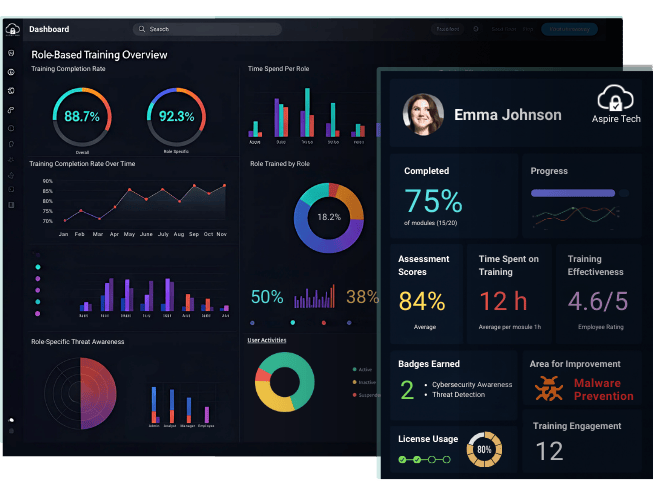
- Functional Data Correlation: Training analytics can correlate training outcomes with real-world operational data. AI can assess whether a training module reduced safety incidents or customer complaints on a route.
- Predictive Analytics: By analyzing trends across the workforce, AI can predict potential safety hotspots. If 40% of night-shift operators fail a low-light surveillance module, the system flags it as a risk before an incident happens.
Future Outlook: AI's Impact on the Transit Safety and Security Program (TSSP) Certification
The Transit Safety and Security Program (TSSP) Certificate is a mark of professional distinction, covering rail system safety, incident investigation, and emergency management. As AI evolves, it will become key to earning and maintaining these certifications.
We may soon see AI-proctored certifications where candidates complete AI-generated simulations instead of just taking a test. AI could make certifications more accessible by tutoring candidates in transportation safety and TSI coursework.
Conclusion: Building a Resilient Transit Network through Personalized Intelligence
The goal of security training is to build a workforce of safety leaders, not students. Every bus driver, mechanic, and station agent plays a vital role in the security web of our cities.
AI's personalized approach helps transit agencies give employees the right knowledge at the right time. This shift reduces liability and compliance risks while protecting the millions of daily passengers.
The future of transit security is about smarter, better-prepared people, not just more cameras or guards. And AI is the key to unlocking that potential.
About the Author
Emily Davis · Security Operations Manager
Emily Davis is a Security Operations Manager focused on strengthening threat detection, incident response, and security awareness programs.
Stay Updated
Get the latest cybersecurity insights delivered to your inbox.

Related Articles