The Critical Role of AI in Preventing Phishing Attacks in Public Transit

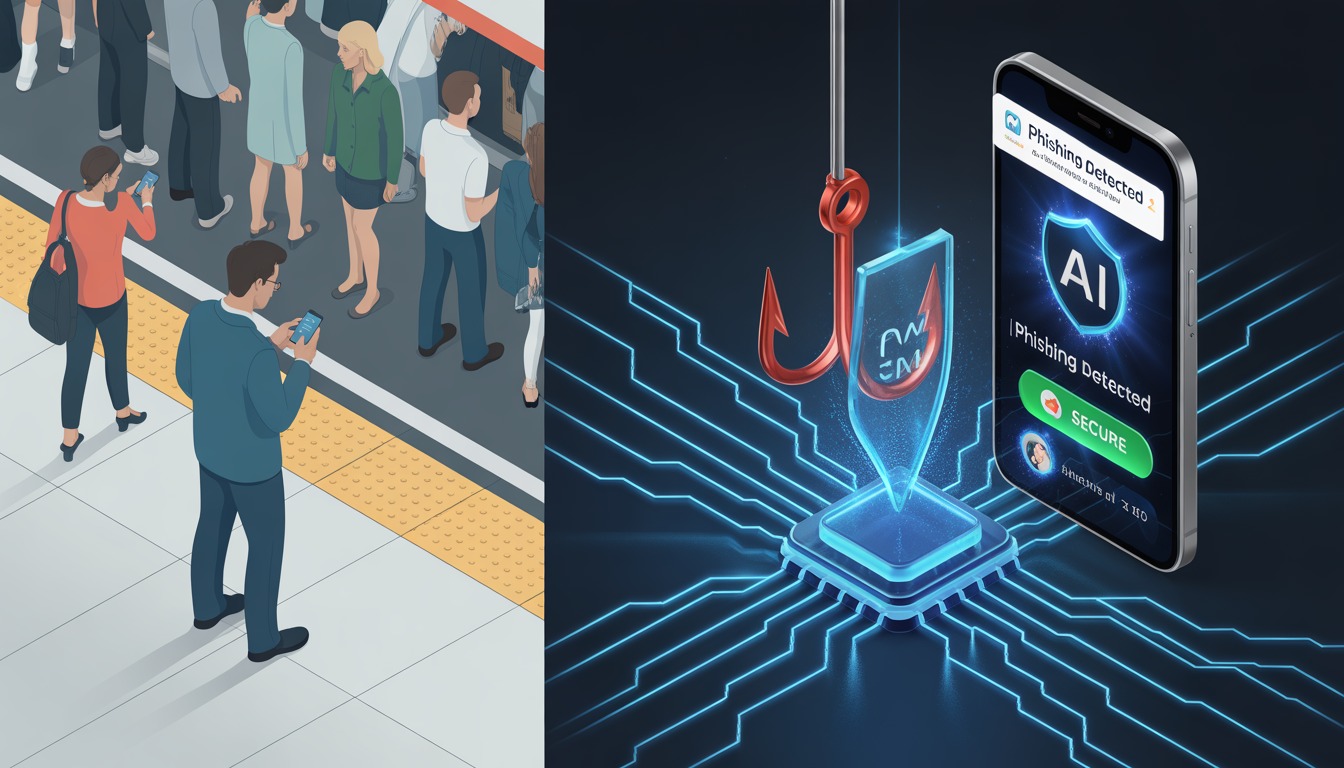
Table of Contents
The Digital Transformation of Transit Security
Public transportation is the backbone of modern cities. It supports millions of daily users. It utilizes a comprehensive network of buses, trains, and subways. However, behind the turnstiles and scheduling systems lies a massive digital infrastructure that is increasingly vulnerable to cybercrime. As transit agencies digitize operations, from ticketing systems to vendor payments, they become key targets for cyber criminals.
The Threat Landscape
The threat landscape has shifted dramatically. We have moved past the era of easily spotted scam emails riddled with spelling errors. Today, agencies face an evolving threat powered by artificial intelligence. Attackers use generative AI to launch personalized, scalable, and terrifyingly convincing campaigns.
Understanding AI Phishing: A New Breed of Cybercrime
To defeat the enemy, you must first understand their weaponry. AI-powered phishing, including spear phishing, uses large language models (LLMs) and machine learning. It automates the creation of deceptive content. In the past, a hacker might spend hours researching a single high-value target to craft a convincing email. Now, AI enables that same hacker to generate thousands of hyper-personalized messages in seconds.
Critical Threats to Public Transit Infrastructure
Public transit agencies are unique targets. They manage critical infrastructure, handle vast sums of public funds, and maintain databases of rider information. The integration of AI tools by criminals introduces specific risks to this sector.
Deepfakes and Voice Cloning
Perhaps the most disturbing development is the use of deepfake technology. A deepfake video can superimpose a CEO's face onto an actor's body in real-time. Similarly, AI can clone a person's voice with just a few seconds of reference audio. Imagine a scenario where a transit agency's finance director receives a call from the "General Manager." The voice matches the original with near-perfect fidelity. The urgency in the tone is familiar. The "Manager" requests an immediate transfer of funds to a contractor to prevent a service stoppage. In reality, it is a voice clone orchestrated by AI. This is not science fiction; it is a current cyber threat capable of bypassing traditional verification methods.
Real-time News Integration
AI-based systems allow attackers to integrate real-time events into their scams in the real world. If a transit system has a signal failure or a major delay, attackers can act fast. They can create phishing campaigns about the incident. Employees who expect news about the delay are more likely to click a link. The link may claim to be a “System Status Update” or “Emergency Protocol.” By using real service disruptions, phishing attacks seem legitimate and are hard to question in the moment.
From Generic Spam to Hyper-personalization
The hallmark of old-school phishing was its generic nature. Emails started with "Dear Customer" and utilized vague threats. Artificial intelligence has changed the paradigm. By scraping social media platforms like LinkedIn and X, AI agents can build detailed profiles of transit employees. They know who works in procurement, who their managers are, and which conferences they recently attended. AI enables attackers to weave this sensitive information into the narrative of the anti-phishing message. An email might reference a specific project deadline or a recent vendor meeting. This hyper-personalization eliminates the skepticism that usually protects users. When a message references accurate, non-public details, the brain tends to trust it. This makes these attacks significantly harder to detect than their predecessors.
High-stakes Case Studies: A Warning for Transit
The $25 Million Deepfake
In a landmark case in Hong Kong, fraudsters tricked a finance worker at a multi-national firm into paying out $25 million. The worker was initially suspicious of an email request. However, the attackers established a live video session. The worker saw the company’s CFO and several other colleagues. The employee didn’t realize that all the other participants on the call were deepfake reproductions. The AI tools used to create the video and audio were convincing enough to help one of the largest known deepfake heists. For a transit agency, where large-scale capital projects and vendor payments are common, this fraud is a major risk.
The Energy CEO Voice Clone
In another case, scammers tricked the CEO of a UK energy firm into sending €220,000 to a supplier in Hungary. The CEO believed he was speaking to his boss, the chief executive of the firm’s German parent company. The AI-generated voice captured not just the accent, but the specific melody and cadence of the executive's speech.
Technical Mechanics of AI Attacks
Polymorphic Attacks
Traditional security filters often rely on "signatures"—identifying malicious code or text strings that have been seen before. AI facilitates polymorphic attacks, where the phishing message or malware code changes slightly with every iteration. By changing the syntax, subject line, or sender name in each email, AI makes sure no two messages match. This prevents pattern-matching security software from flagging the campaign, allowing the phishing threats to slip through the cracks.
Automated Website Replication
Phishing often involves directing a user to a fake login portal to steal credentials. AI can now instantly scrape legitimate communications and websites to build perfect replicas. If a transit agency updates its employee portal, phishing sites can auto-update too. They can align with the new design while sustaining their effectiveness.
Prevention Strategies: Fighting AI with AI
Anomaly Detection and Behavioral Monitoring
AI-powered security systems don’t just scan for known malicious links. They establish a baseline for normal behavior. By analyzing email traffic patterns, communication styles, and login behavior, AI can spot subtle anomalies. If an employee accesses the network from a new location at 3 AM, the AI flags it. If the tone of a vendor email suddenly changes, the AI flags it. Behavioral insights are crucial to preventing account takeovers and insider threats.
Finance Core AI Security Protocols
For the financial operations within transit agencies, specialized protection is required. This is where solutions like Finance Core AI come into play. Designers created these systems to protect the institutional financial layer. Finance Core AI utilizes specialized protocols to verify transaction requests against historical data and established vendor patterns. It adds a layer of intelligence that scrutinizes the context of a financial request, not just the content. If a payment request looks like phishing or breaks procurement rules, the system stops the transaction for manual review.
Identity Verification
Combating deepfakes requires proof of liveness. AI-driven identity verification tools can analyze video feeds and spot subtle deepfake artifacts. These may include irregular blinking patterns or pixelation around the mouth. Implementing these checks for high-value transactions is becoming a standard best practice.
Future Outlook: The 2025 Threat Landscape
The arms race between attackers and defenders is speeding. Industry projections paint a concerning picture for the near future. Reports suggest that by 2025, global organizations could face $18.6 billion in cybercrime risk. AI-powered attacks may make up a large share of that total. We can expect phishing threats to become even more autonomous. “Autonomous agents” could, in theory, hold long email chats with transit staff. They could build trust over weeks before sending the payload. Furthermore, AI in ransomware can make malware spread faster after a phishing breach. It can also target systems more accurately than before.
Strengthening Public Transit Infrastructure
The role of AI in preventing phishing attacks is pivotal for the safety and reliability of public transit. As attackers use generative AI to scale their attacks and improve deception, transit agencies must respond with equal skill. Protecting this sector requires a holistic approach. It involves upgrading technical defenses with phishing detection AI, implementing strict verification protocols for financial transactions, and fostering a culture of cybersecurity awareness. Employees remain the first line of defense. Training programs must evolve. They should teach staff to spot typos. They should also provide training on recognizing AI-related indicators. Watch for unnatural pauses in voice calls. Check for visual artifacts during head movement. Public transit is about moving people safely. In the digital age, safety means keeping the networks that run our trains and buses secure. It also means protecting them from the next generation of cyber threats. By embracing AI defense, agencies can stay one step ahead of the criminals and keep their cities moving.
About the Author
Raj Patel · IT Security Specialist
Raj Patel is an experienced IT Security Specialist focused on cybersecurity strategy, threat detection, and protecting organizations from evolving digital risks.
Stay Updated
Get the latest cybersecurity insights delivered to your inbox.

Related Articles